

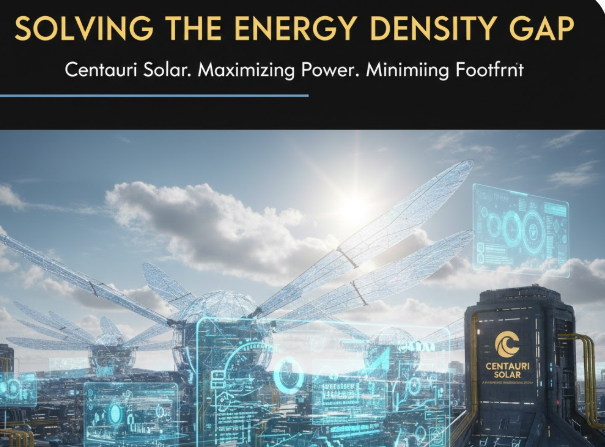
The transition to solar power as a leading source of clean, renewable energy has been one of the most remarkable trends of the 21st century. Yet despite rapid expansion, a persistent challenge remains: the energy density gap. Solar power has inherently lower energy density than fossil fuels — meaning more land and infrastructure is needed per unit of energy produced — and this becomes especially critical in large‑scale industrial energy projects, utility grids, and utility‑scale solar farms.
Addressing this energy density gap is vital if solar is to reliably meet the soaring demands of modern power systems. That’s where centauri solar steps in with next‑generation technology breakthroughs, integrating high‑efficiency solar cells, advanced energy storage, and AI‑driven energy management to dramatically improve how solar systems perform at scale. You can explore these innovations firsthand at https://centauricorp.us/solar‑innovation/.
In this article, we’ll take an in‑depth look at the strategies centauri solar employs to solve the energy density gap, enhance system reliability, and empower industrial and utility projects with cleaner, smarter, and more efficient solar energy solutions.
Understanding the Energy Density Gap in Solar
Solar energy production is fundamentally limited by the amount of sunlight available per square meter of surface — a constraint that’s very different from the compact energy contained in fuels like coal, oil, or natural gas. For large‑scale solar installations, this translates into expansive land requirements and complex grid integration challenges.
Consider a utility‑scale solar plant: although technology has significantly improved over the last decade, most traditional photovoltaic systems still require substantially more space to produce the same energy output as conventional fossil fuel plants. This “low energy density” means solar projects must optimize both surface‑level power conversion and energy storage to remain competitive and viable at large scale.
High‑Efficiency Solar Harvesting: Maximizing Power Per Square Meter
One major approach to closing the energy density gap is increasing solar cell efficiency — extracting more power from the same amount of sunlight. Next‑generation solar technologies, including tandem cells (which layer materials like perovskites over traditional silicon cells) and advanced photovoltaic designs, are pushing efficiencies well beyond what conventional panels can deliver.
By developing and deploying higher‑efficiency solar modules, centauri solar reduces the footprint required for any given energy output. These improvements are essential for large‑scale projects where land use, permitting, and cost per megawatt are key concerns. Higher efficiencies mean fewer panels, less land, and lower overall installation and maintenance costs — directly contributing to solving the energy density challenge.
Graphene‑Enhanced Energy Storage: Power When It’s Needed Most
Even the most efficient solar cells still depend on the sun’s availability. Without effective storage, excess solar energy generated during peak daylight cannot be used after the sun sets or on cloudy days — a limitation that further impacts utility‑scale solar operations.
To bridge this gap, centauri solar is pioneering graphene‑based energy storage systems that offer significantly higher energy density and conductivity than conventional battery technologies. Graphene’s unique properties help store more energy in smaller, lighter, and more durable systems — a critical advantage for industrial projects and large solar farms aiming to provide reliable, continuous power.
Graphene‑enhanced storage supports “24/7 solar” by capturing surplus daytime generation and dispatching it on demand. This capability not only closes the intermittency gap but also dramatically improves the effective energy density of solar installations — essentially turning every solar panel into a more potent power asset.
AI‑Driven Optimization: Smarter Energy Distribution and Forecasting
Another key innovation centauri solar brings to the table is AI‑driven energy management, which goes beyond storage to optimize how solar energy is distributed, consumed, and forecasted across systems of any size.
Smart grid AI platforms can analyze weather forecasts, real‑time generation data, and grid demand to make instantaneous decisions about energy routing. These systems boost the overall density of usable energy by:
- Predicting peak generation and time‑shifting stored energy for critical demand periods.
- Balancing multiple energy sources, including solar, storage, and grid inputs, for maximum reliability.
- Reducing waste and optimizing performance across industrial loads.
By intelligently matching supply with demand in real time, AI optimizes energy usage, minimizes curtailment (wasted energy that can’t be used or stored), and enhances the effective capacity of large solar installations.
Hybrid Systems and Innovative Project Designs
Large‑scale solar projects increasingly integrate hybrid technologies — combining photovoltaics with thermal storage, concentrated solar power (CSP), and other high‑density solar methods — to boost total energy output per acre of land. For example, concentrated PV plants that aim solar radiation into high‑efficiency receivers can improve energy capture in ways traditional flat panels cannot.
Centauri’s approach to industrial solar includes exploring hybrid and modular designs that combine advanced cell technologies with thermal and electrical storage — creating more densely packed solar energy ecosystems that deliver higher returns on land, capital, and operational investments.
Scaling Fast for Industrial and Utility Markets
The solar sector’s growth is nothing short of explosive: global solar capacity surpassed 4,000 GW by 2025, driven by utility deployments and industrial demand. Yet as capacity grows, so does the urgency to make large‑scale solar more efficient and space‑competitive with other energy sources.
Centauri solar’s innovations directly support this evolution. By boosting solar cell efficiency, enhancing storage with graphene technology, and integrating AI for intelligent energy management, solutions offered at https://centauricorp.us/solar‑innovation/ are enabling solar projects to deliver more power per unit area — effectively diminishing the traditional energy density gap that has held back utility‑scale solar deployment.
Conclusion: Solar Power With Higher Impact, Less Footprint
The energy density gap remains one of solar energy’s most formidable challenges in the race to power entire industries and grids with renewable energy. However, breakthroughs in high‑efficiency solar cells, graphene‑based energy storage, and AI‑optimized energy distribution are rapidly changing the game.
centauri solar stands at the forefront of this transformation, offering technologies that make industrial and utility‑scale solar installations more efficient, compact, and reliable than ever before. By solving the energy density gap, Centauri is not just advancing solar power — it’s empowering a cleaner, smarter, and more sustainable energy future.
