

India holds a unique and sacred place in the history of Buddhism. It is the land where Prince Siddhartha was born, attained enlightenment, preached the Dharma, and ultimately attained Mahaparinirvana. Today, the country is home to some of the most revered pilgrimage sites in the Buddhist world. These sacred locations are not only spiritually significant but also rich in history, philosophy, and culture. Exploring Buddhist Tourist Destinations in india offers travelers a profound opportunity to connect with Buddha’s teachings while walking through places that shaped one of the world’s greatest spiritual traditions.
Below is a detailed guide to the most important Buddhist destinations in India that are directly associated with the life and teachings of Lord Buddha.
Bodh Gaya – The Land of Enlightenment
Bodh Gaya is the most sacred of all Buddhist pilgrimage sites. It was here, under the Bodhi Tree, that Siddhartha Gautama attained enlightenment and became the Buddha. This moment laid the foundation for all Buddhist teachings, including the Four Noble Truths and the Eightfold Path.
The Mahabodhi Temple Complex, a UNESCO World Heritage Site, stands as the spiritual heart of Bodh Gaya. Pilgrims from across the world gather here to meditate, chant, and reflect in an atmosphere filled with serenity. Among all Buddhist Tourist Destinations in india, Bodh Gaya holds unparalleled importance as the birthplace of Buddhist wisdom.
Sarnath – The First Sermon of the Buddha
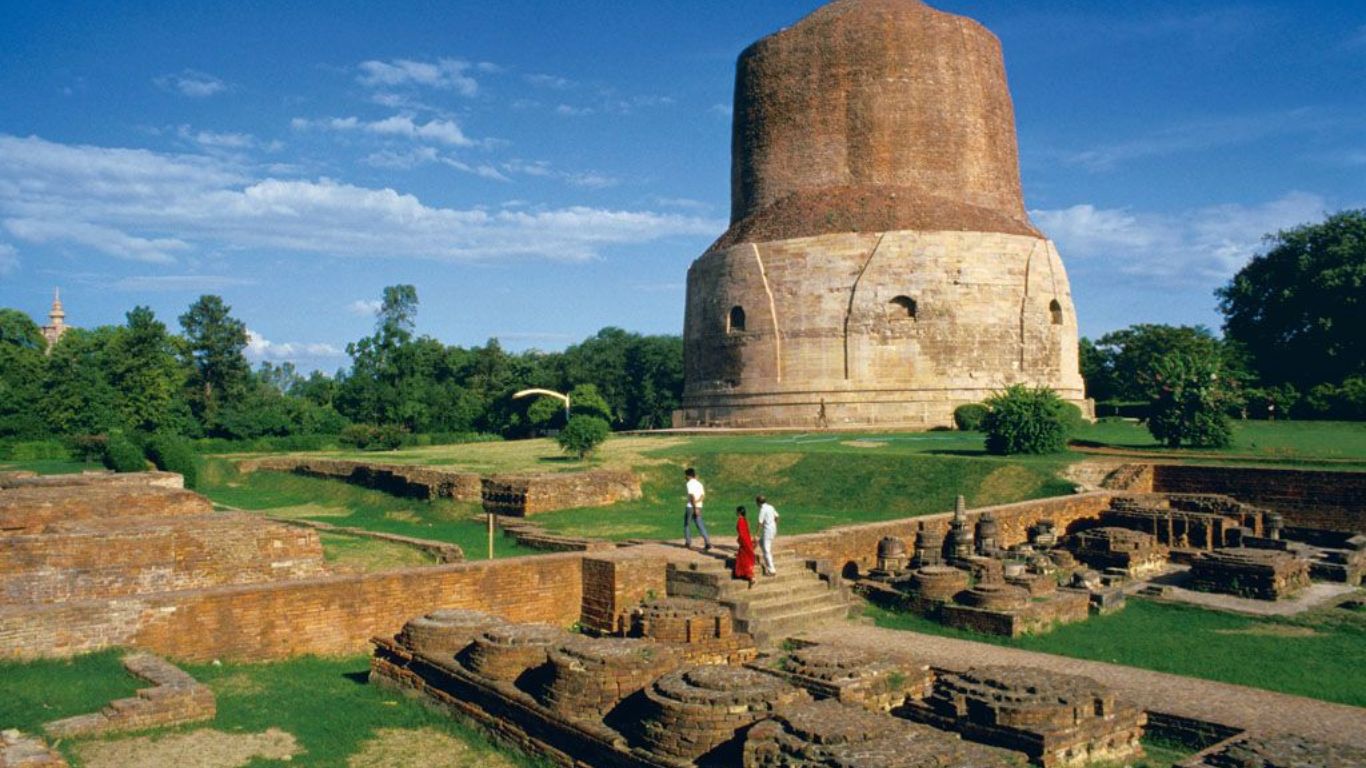
Located near Varanasi, Sarnath is where Buddha delivered his first sermon after enlightenment. Known as the “Turning of the Wheel of Dharma,” this sermon introduced the core principles of Buddhism to his first five disciples.
Key attractions include the Dhamek Stupa, Ashoka Pillar remnants, and the Sarnath Archaeological Museum. Sarnath represents the moment when Buddha’s personal awakening transformed into a universal teaching, making it one of the most meaningful Buddhist Tourist Destinations in india.
Kushinagar – The Place of Mahaparinirvana
Kushinagar is the place where Lord Buddha attained Mahaparinirvana after completing his earthly journey. This destination symbolizes impermanence, a central concept in Buddhist philosophy.
The Parinirvana Temple houses a reclining statue of Buddha, representing his final moments. For pilgrims and spiritual seekers, Kushinagar offers a deeply contemplative experience and stands as a reminder of Buddha’s teachings on detachment and liberation.
Rajgir – The Seat of Important Teachings
Nestled among scenic hills, Rajgir was an important city during Buddha’s lifetime. He spent several years here delivering sermons and engaging in philosophical discussions with kings and scholars.
Rajgir is closely associated with Gridhakuta Hill (Vulture’s Peak), where Buddha delivered some of his most profound teachings, including discourses later central to Mahayana Buddhism. Its tranquil surroundings make Rajgir one of the most spiritually enriching Buddhist Tourist Destinations in india.
Nalanda – The Ancient Center of Buddhist Learning
Near Rajgir lies Nalanda, once home to Nalanda Mahavihara, one of the world’s earliest residential universities. Although Buddha lived before Nalanda’s peak, the university became a global center for Buddhist studies based on his teachings.
Scholars from China, Korea, Tibet, and Southeast Asia traveled here to study Buddhist philosophy, logic, and meditation. The ruins of Nalanda reflect India’s role in spreading Buddhism across Asia and make it a must-visit among Buddhist Tourist Destinations in india.
Shravasti – The City of Miracles
Shravasti was where Buddha spent many monastic seasons and delivered a large number of sermons. It is also believed to be the site where he performed several miracles to demonstrate the power of the Dharma.
The Jetavana Monastery, donated by Anathapindika, was one of Buddha’s favorite residences. Shravasti’s peaceful ruins and monasteries offer insight into Buddha’s daily life as a teacher and guide.
Vaishali – The Birthplace of Buddhist Community Life
Vaishali holds special significance as the place where Buddha allowed women to join the monastic order, leading to the formation of the Bhikkhuni Sangha. This decision marked a major step toward inclusivity in spiritual practice.
Vaishali is also where Buddha delivered his last sermon before moving toward Kushinagar. The Ashoka Pillar and ancient stupas here highlight its importance among Buddhist Tourist Destinations in india.
Sanchi – The Symbol of Buddhist Art and Architecture
Located in Madhya Pradesh, Sanchi is famous for its Great Stupa, commissioned by Emperor Ashoka. While Buddha never visited Sanchi, the site plays a crucial role in preserving and propagating his teachings through art and symbolism.
The intricate carvings on the stupas depict scenes from Buddha’s life and Jataka tales, making Sanchi an essential destination for understanding Buddhist heritage.
Why These Destinations Matter Today
Visiting Buddhist Tourist Destinations in india is not only about historical exploration but also about personal transformation. These sacred sites allow travelers to:
- Understand Buddhist philosophy in its original context
- Practice meditation in authentic surroundings
- Experience peace, mindfulness, and compassion
Each destination reflects a different phase of Buddha’s life and teachings, collectively offering a complete spiritual journey.
Conclusion
India’s Buddhist heritage is vast, profound, and deeply inspiring. From enlightenment at Bodh Gaya to Mahaparinirvana at Kushinagar, each sacred site tells a story rooted in Buddha’s timeless teachings. Exploring Buddhist Tourist Destinations in india offers a rare opportunity to walk the path of the Buddha, gaining spiritual insight, historical understanding, and inner peace along the way.
For anyone seeking meaning beyond travel, these destinations serve as living classrooms of wisdom, compassion, and enlightenment.
