

New parents are constantly being shown products that promise to make life easier. From automatic formula mixers to wipe warmers and “smart” baby monitors with endless features, the baby market is full of gadgets that look impressive but rarely stay useful for long. Most parents learn quickly that the problem isn’t a lack of products—it’s that many of them don’t solve the tasks that actually drain time every day.
The kitchen is where this becomes obvious. Feeding routines create repetitive work that doesn’t feel meaningful but still demands constant effort. The tools that are truly worth buying aren’t the ones with flashy features. They’re the ones that reduce repeated chores in a real, measurable way. If a device can remove steps from daily feeding cleanup or meal prep, it’s far more likely to earn counter space than a gadget designed for occasional use.
Which parenting tasks deserve automation
Not every parenting task needs a device, and buying too many gadgets often creates more clutter than convenience. The best candidates for automation are tasks that are frequent, repetitive, and low-value. In other words, chores that must be done constantly but don’t require a parent’s attention in a meaningful way.
The simplest way to evaluate a product is to ask: does this solve something I will do every day? If the answer is no, it probably won’t be used enough to justify the cost or space. On the other hand, tasks like cleaning feeding gear, drying accessories, and prepping basic baby meals happen so often that automation can make a noticeable difference.
The “worth it” test for kitchen gadgets
A useful kitchen device should reduce steps, not add them. If a product requires extra setup, multiple parts, or complicated cleaning, it becomes another chore. Many new parents already feel overwhelmed, so even small inefficiencies can make a gadget feel frustrating rather than helpful.
The best smart kitchen tools work quietly in the background. They don’t require constant monitoring, and they don’t create additional mess. Instead, they simplify an existing routine in a way that feels automatic, consistent, and repeatable.
Where bottle cleanup usually breaks the routine
Bottle cleanup is one of the most disruptive recurring chores in early parenting. It doesn’t matter whether a family is bottle-feeding full time, combo-feeding, or pumping occasionally—feeding accessories create a constant stream of items that need cleaning. Bottles, nipples, caps, pacifiers, and pump parts can pile up quickly, and cleaning them manually becomes a task that repeats throughout the entire day.
The problem isn’t just the time. It’s the timing. Bottle washing often happens late at night, early in the morning, or in short breaks between other responsibilities. Parents don’t get to “save it for later” because clean bottles are required for the next feeding. That makes the routine feel urgent, especially when sleep schedules are unpredictable.
Why a bottle washer becomes a real solution
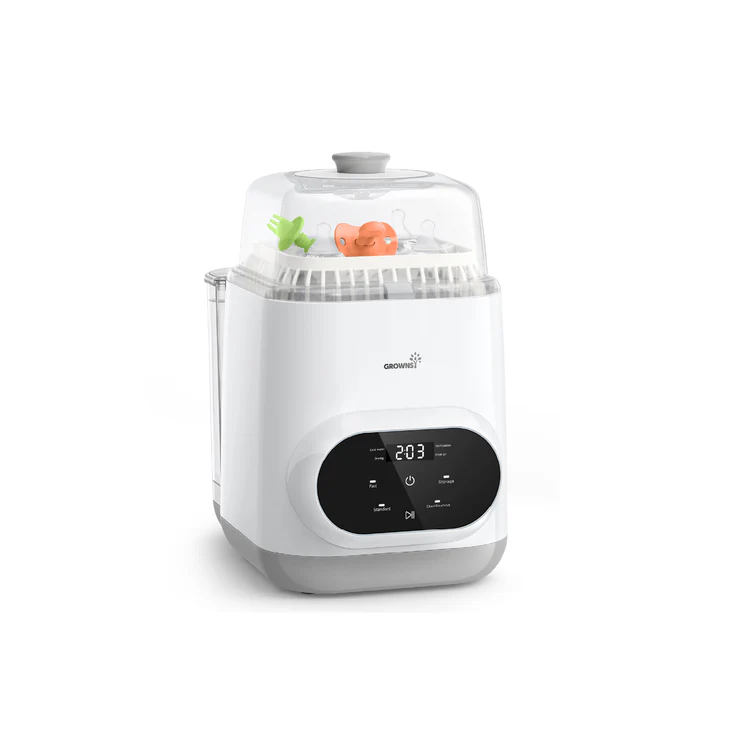
This is where a dedicated bottle washer can become one of the most practical smart kitchen upgrades for new parents. Instead of treating baby feeding gear like regular dishes, bottle washers are designed for small parts and repeated daily cycles. They focus on the reality of infant feeding: narrow bottle interiors, tiny accessories, and frequent cleaning needs.
A smart bottle washer for parents fits into this category by helping automate washing routines that otherwise require constant sink time. The appeal is not just cleanliness—it’s consistency. Parents who rely on bottle-feeding routines often want a predictable system that reduces the manual labor behind every feeding.
When bottle care stops feeling manageable
Many parents hit a point where bottle care becomes one of the biggest household stressors. The sink becomes cluttered, drying racks take over the counter, and there’s always uncertainty about what is clean and ready. Even families with dishwashers may find that baby parts don’t wash or dry properly unless placed perfectly.
When a product can remove that friction and create a smoother workflow, it starts to feel less like a gadget and more like a practical appliance. That’s typically the difference between something that gets used once a week and something that becomes part of the daily routine.
When a food maker becomes useful
Once babies begin solids, the kitchen routine changes again. Now parents aren’t only managing bottle cleaning—they are also preparing purées, soft foods, and early meals. Many parents want to make homemade baby food because it provides control over ingredients and makes it easier to introduce variety. But the process can become overwhelming when it requires separate pots, steaming baskets, blenders, and multiple rounds of cleanup.
The issue is that baby food portions are small, but the mess can be large. Steaming on the stove, blending separately, transferring portions, and washing cookware often feels like too many steps for a few spoonfuls of food. That’s why many parents either stop making homemade purées or only do it occasionally.
Why steam-and-blend appliances stand out
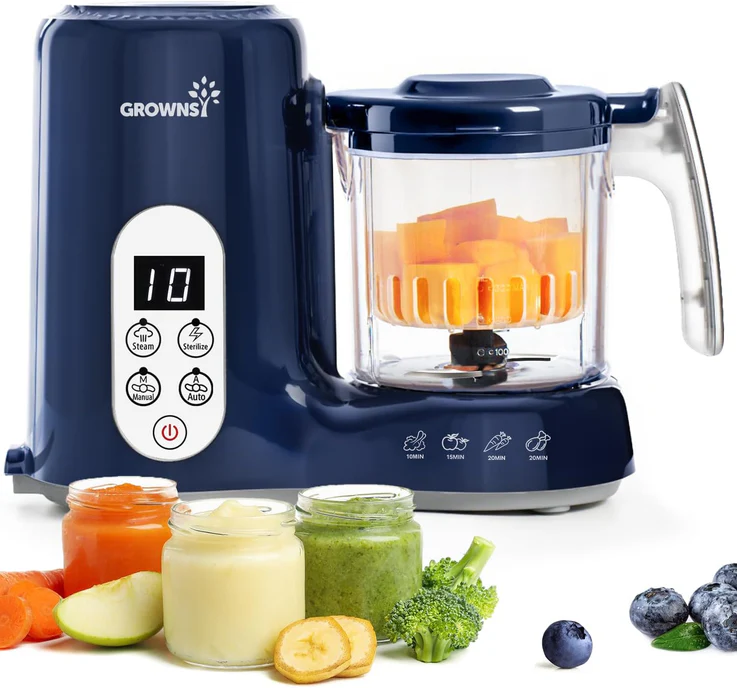
A baby food maker becomes useful when it reduces clutter and combines steps into one workflow. Instead of steaming in one pot and blending in another device, a steam-and-blend system lets parents prepare baby food in a more streamlined routine. This matters because solids feeding is not a one-time phase—it lasts for months and gradually evolves into more complex textures.
A baby food maker and steamer supports parents during this stage by simplifying the process of steaming and blending without relying on multiple separate tools. For households that want homemade baby food but don’t want constant kitchen mess, this kind of appliance can make the solids stage easier to maintain.
The real value: texture flexibility and repeat use
Many parents don’t realize how quickly babies move beyond smooth purées. The solids journey shifts toward thicker blends, mashed textures, and mixed foods as babies develop. A useful baby food maker should support that progression without forcing parents to buy new tools later.
This is where these appliances become more than a short-term purchase. If the machine can handle multiple stages of texture and can be used repeatedly without creating major cleanup, it becomes a long-term kitchen tool rather than a temporary baby gadget.
A quick buyer checklist
The biggest mistake new parents make is buying gadgets based on features rather than routine fit. The best approach is to evaluate products based on how often they will be used and how much friction they remove. A device can look impressive, but if it doesn’t reduce daily workload, it won’t feel worth it.
The best feeding-tech products are not about luxury. They are about reducing repetitive work. When a product replaces multiple steps and makes daily routines more predictable, it becomes easier to justify the counter space.
Practical checklist for “worth it or not”
Before buying a feeding-related kitchen gadget, ask:
- Will I use this multiple times per week?
- Does it reduce manual steps or just shift them?
- Does it cut down cleanup time and dishwashing?
- Will it reduce counter clutter instead of adding to it?
- Will it still be useful three months from now?
When you apply that checklist, bottle washers and baby food makers tend to stand out because they target chores that repeat constantly in early parenting. They aren’t novelty gadgets—they are routine tools designed for high-frequency use.
Final takeaway: buy fewer gadgets, but buy smarter ones
New parents don’t need every trending baby product. Most gadgets are easy to skip because they solve occasional problems. The products worth considering are the ones that reduce repeated work in a meaningful way, especially in the kitchen where feeding routines create nonstop cleanup.
Bottle washing and early food prep are two of the clearest examples of chores that benefit from automation. When parents choose tools that simplify these workflows, they’re not just buying baby gear—they’re investing in a smoother household routine. And in the early months of parenting, that kind of practical efficiency is often the most valuable tech upgrade of all.
