

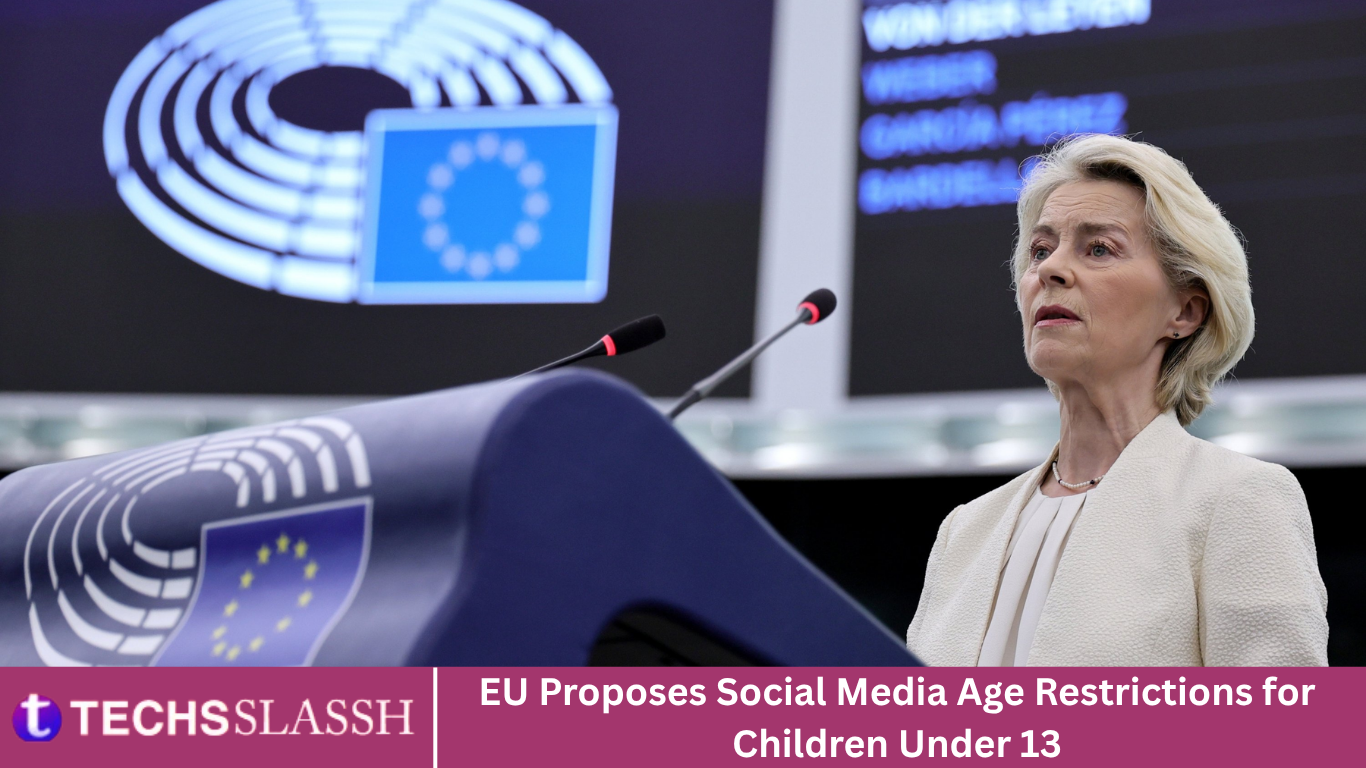
The European Union is considering stronger rules around children’s access to social media, with a proposal focused on restricting access for children under the age of 13. The discussion reflects growing concerns about how young users interact with social platforms.
And the potential effects of excessive or age-inappropriate online activity. The proposal is part of a wider European debate about protecting children online while allowing them to benefit from digital services.
Social media has become an important part of communication, entertainment, education, and social interaction, but younger children can also face risks related to privacy, harmful content, addictive design, advertising, and contact with strangers.
More Read: Meta One Launches New AI Tools for Instagram and WhatsApp
What Is the EU Proposing?
The proposal would establish an age-related restriction aimed at children under 13 using social media platforms.
The idea is to create a clearer minimum age for access and strengthen protections for younger users. However, the exact way such restrictions would work depends on the final rules, including how platforms would verify users’ ages and how exceptions or parental involvement might be handled.
Age limits are not entirely new. Many social media services already state that users must meet a minimum age requirement, often around 13. The proposed EU approach could make enforcement more consistent and place greater responsibility on platforms.
Why Is the EU Considering an Age Limit?
Children are spending more time online, and social media platforms are designed to encourage frequent engagement. Policymakers are increasingly examining whether existing protections are sufficient for younger users.
Several concerns are central to the debate:
- Exposure to inappropriate or harmful content
- Excessive screen time and constant notifications
- Online bullying and harassment
- Collection and use of children’s personal information
- Contact with unknown adults
- Targeted advertising
- Recommendation systems that can repeatedly promote engaging content
- Social pressure and comparison among young users
The proposed age restriction is intended to address some of these concerns by limiting access at an early age.
The Growing Focus on Child Safety Online
Protecting children online has become a major policy issue across Europe. Rather than focusing only on individual users and parents, policymakers are increasingly looking at the responsibilities of technology companies.
This includes how platforms design their services, recommend content, collect data, and verify the ages of users. The EU has already introduced broad digital regulations that place additional obligations on large online platforms. Child protection is an important part of this wider regulatory approach.
How Would Age Verification Work?
One of the biggest practical questions is how platforms could determine whether a user is under 13.
Simply asking users to enter their date of birth may not be enough because children can provide false information. Stronger verification could involve digital identity systems or other age-assurance technologies.
However, age verification creates another challenge: privacy. Any system designed to confirm a person’s age would need to avoid unnecessarily collecting sensitive personal information. Policymakers therefore face a difficult balance between protecting children and protecting everyone’s privacy.
A successful system would ideally confirm whether someone meets an age requirement without creating a large database of users’ identity information.
What About Parental Consent?
Parental involvement is another important part of the discussion.
Some online services allow parents to manage children’s accounts or provide consent for certain activities. An age restriction could potentially operate alongside parental controls, although the specific rules would determine how much authority parents have.
The debate also raises questions about whether parental permission should allow younger children to use certain platforms or whether some services should remain unavailable regardless of parental approval.
Why Social Media Platforms May Face More Responsibility
Under a stronger regulatory approach, platforms could be expected to do more than simply publish an age requirement in their terms of service.
Companies may need to improve age-assurance systems, provide safer settings for young users, limit certain features, and design services with children’s safety in mind.
This represents a broader shift in technology regulation. Instead of expecting parents and children to manage every online risk themselves, policymakers are asking platforms to build stronger safeguards directly into their products.
Potential Benefits of the Proposal
A minimum age restriction could provide several potential benefits for younger children. First, it could reduce the likelihood that very young users encounter content designed for older audiences. It could also limit children’s exposure to certain forms of online advertising and data collection.
A consistent rule could also make expectations clearer for families and technology companies. Another potential benefit is encouraging children to develop digital habits gradually rather than entering highly engaging social platforms at very young ages.
Challenges and Criticism
An age restriction would not solve every problem associated with social media. Children may still find ways to create accounts by entering incorrect birth dates or using another person’s information. Enforcement could therefore be difficult.
There are also concerns about privacy if platforms introduce intrusive age-verification methods.
Another issue is that not every child uses social media in the same way. Some platforms can provide educational resources, creative communities, communication tools, and opportunities for young people to connect with friends.
This means policymakers must consider both the risks and legitimate uses of digital platforms.
What Could the Rules Mean for Parents?
If stronger restrictions are introduced, parents could have clearer guidance about when children should begin using social media. Parents may also have access to stronger controls and safer default settings. However, technology rules are unlikely to replace parental involvement entirely.
Parents may still need to discuss online privacy, appropriate behavior, cyberbullying, scams, strangers, and responsible screen use with their children.
What Could the Proposal Mean for Social Media Companies?
Social media companies operating in the EU could face additional responsibilities if the proposal becomes law.
Platforms may need to review:
- Age verification
- Account creation processes
- Privacy settings
- Advertising practices
- Recommendation systems
- Parental controls
- Reporting mechanisms
- Child-safety protections
The technical and legal requirements would depend on the final legislation and how it is implemented across EU member states.
A Wider Debate About Children and Technology
The proposed under-13 restriction is part of a much larger conversation about how children should interact with technology. Smartphones, video platforms, gaming services, messaging apps, and social networks can all provide useful experiences. At the same time, children may be more vulnerable to certain online risks.
The EU’s approach reflects a growing policy preference for stronger protections rather than relying entirely on users to control their own exposure.
The central challenge will be creating rules that protect children without unnecessarily compromising privacy, limiting useful digital experiences, or placing unrealistic burdens on families and technology companies.
As the proposal develops, the details will determine how the rules affect children, parents, and social media companies across Europe.
Frequently Asked Question
What age is the EU proposing for social media restrictions?
The proposal focuses on restricting social media access for children under 13.
Why does the EU want to restrict social media for younger children?
The main concerns include children’s exposure to harmful content, privacy risks, cyberbullying, excessive engagement, and contact with potentially unsafe individuals.
Do social media platforms already have age limits?
Many major platforms already set minimum age requirements, commonly around 13. The EU proposal could strengthen and improve enforcement of age restrictions.
How could social media companies verify a user’s age?
Possible approaches include age-assurance technologies or digital identity systems. The specific method would depend on the final rules.
Could age verification create privacy concerns?
Yes. Age verification could involve personal information, so privacy protections would be an important part of designing such systems.
Would parental permission allow children under 13 to use social media?
That would depend on the final legislation and the specific platform. The proposal’s final requirements would determine how parental consent interacts with age restrictions.
Will the proposed rules apply to every online platform?
The exact scope would depend on the final EU legislation and its definitions of social media and other online services. Different types of platforms could face different requirements.
Conclusion
The EU’s proposal for social media age restrictions for children under 13 highlights the growing focus on online child safety. The initiative aims to address concerns surrounding harmful content, privacy, excessive engagement, and other risks that younger users may encounter on social platforms. However, setting an age limit is only one part of the solution. Effective enforcement, privacy-friendly age verification, responsible platform design, parental guidance, and broader digital education will also matter.
