

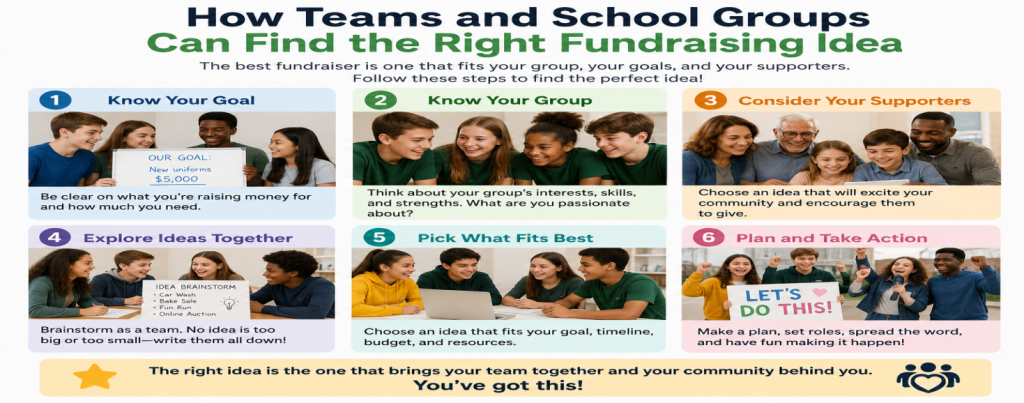
Choosing a fundraising idea can be harder than it seems. Most teams, clubs, and school groups know they need to raise money, but deciding what type of fundraiser to run is often the first challenge. There are countless options, from classic community events to online donation campaigns, product sales, a-thons, calendar fundraisers, raffles, sponsorships, and seasonal fundraisers.
The best fundraising ideas are not always the most creative one. It is the one that fits your group, your audience, your timeline, and your goals. A fundraiser that works well for a large football team may not be the right fit for a small theatre program. A campaign that works during the school year may not work as well during a busy tournament season. Before choosing a fundraiser, organizers should think carefully about what they need and how much time they can realistically commit.
One of the first things to consider is the size of your group. Larger teams and school programs often benefit from fundraisers where every participant can contribute to the outreach. Online donation campaigns, peer-to-peer fundraisers, calendar fundraisers, and a-thons can work well because each athlete, student, or member can share the campaign with their own network. This helps the fundraiser reach more people without placing all the responsibility on one coach, director, or booster leader.
Smaller groups may want to choose fundraisers that are easier to manage with fewer participants. Restaurant nights, car washes, bake sales, spirit wear sales, and local sponsorship campaigns can all work well when the group has a clear plan and a committed core of volunteers. These fundraisers may not require a huge roster, but they still need strong promotion and organization to be successful.
The timeline also matters. Some fundraisers can be planned quickly, while others need more preparation. A digital fundraiser can often launch faster than a large event because there are no products to order, venues to book, or tickets to distribute. On the other hand, events like golf outings, auctions, alumni games, and community nights may take more planning but can create strong engagement when done well.
Groups should also think about what their supporters are most likely to respond to. Families and close friends may be willing to give directly because they care about the participant or program. Local businesses may prefer sponsorship opportunities that give them recognition in the community. Students may be more excited about fundraisers that involve challenges, competitions, or team participation. Matching the fundraiser to the audience can improve results and make the campaign feel more natural.
For groups that are not sure where to start, reviewing a large list of fundraising ideas can help. A resource with many different options gives teams and school programs a chance to compare digital fundraisers, event fundraisers, product fundraisers, and community-based campaigns before choosing one. Instead of settling for the same fundraiser every year, organizers can look for ideas that better match their current needs.
Cost is another important factor. Some fundraisers require upfront spending for supplies, products, prizes, food, or event space. Others can be run with little to no upfront cost. Before choosing an idea, organizers should understand what they need to spend, how much they hope to raise, and how much work will be required. A fundraiser that raises a lot of money may not be worth it if it also creates too much stress or leaves the group with a low final profit.
Simplicity is often underrated. The easier a fundraiser is to explain, share, and support, the more likely people are to participate. If families do not understand what to do, participation can drop. If supporters do not understand why the group is raising money, donations may slow down. A clear goal, a simple message, and easy instructions can make almost any fundraiser more effective.
Promotion also plays a major role. Even a great fundraising idea will struggle if people do not hear about it. Teams and school groups should use email, text messages, social media, flyers, announcements, and personal outreach to spread the word. The most successful campaigns usually combine a good idea with consistent communication.
In the end, the right fundraising idea should fit the group’s goals, schedule, audience, and available support. Teams do not need to choose the flashiest option. They need a fundraiser that people understand, supporters can get behind, and organizers can manage confidently. By comparing different ideas before getting started, school groups and teams can choose a fundraiser that is easier to run and more likely to succeed.
