

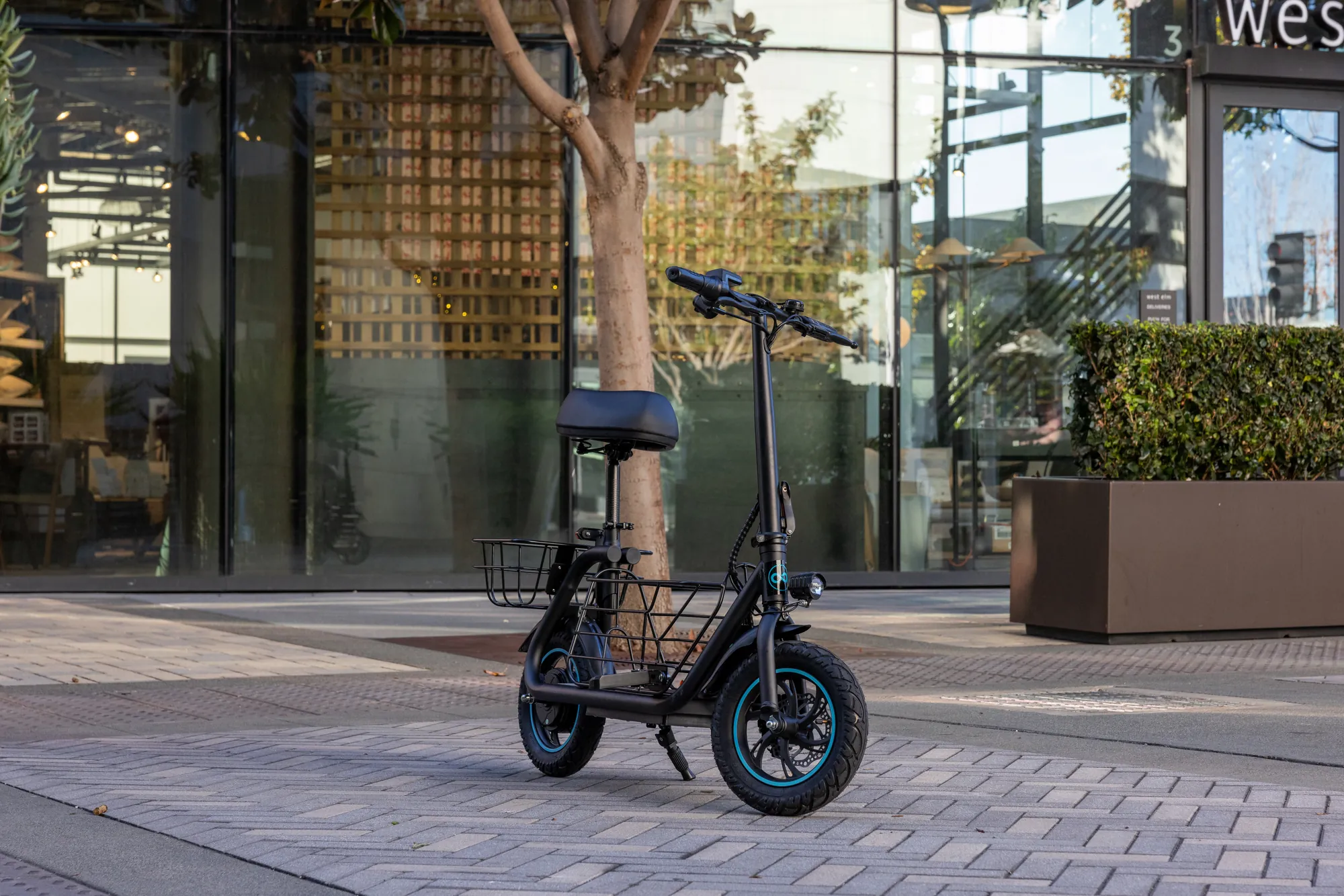
Cities are getting harder to navigate by car and more interesting to explore by two wheels. Whether you are squeezing through the morning rush or cutting your commute time in half, the electric scooter has gone from novelty to genuine urban staple in a remarkably short period. For anyone who has been riding an e-bike and started wondering if there is something better suited to shorter, faster urban hops, the scooter category deserves a serious look.
The conversation around personal electric vehicles has broadened considerably. Riders are no longer choosing between a scooter and nothing. They are weighing it against e-bikes, electric unicycles, cargo bikes, and a growing list of other options. Within that landscape, electric scooters have carved out a distinct identity as the vehicle of choice for quick, low-effort urban movement.
Before diving into what makes city scooters work so well, it is worth noting how varied the wider electric vehicle space has become. Riders looking for different kinds of performance are often surprised by the range on offer, including dedicated electric scooters for city riding positioned alongside mountain-grade and trail-oriented builds. Getting clear on your intended use case is more important than ever when the options are this broad.
Understanding What City Riding Actually Demands
City riding is a specific kind of stress test for any electric vehicle. You are dealing with frequent stops and starts at intersections, varying pavement quality between main roads and side streets, the occasional steep ramp, and the need to share space with pedestrians, cyclists, and cars simultaneously. A vehicle that handles this well is not just fast; it is manageable, predictable, and easy to stop quickly.
Electric scooters built for urban use tend to prioritize a few things above raw speed: braking quality, deck stability, tire size relative to surfaces you will encounter, and weight. A scooter that folds compactly matters if you are heading into a building or hopping onto transit. One that does not fold is a liability the moment you need to carry it upstairs.
Wheel Size and What It Means on Real Streets
One of the most misunderstood specs on an electric scooter is wheel diameter. Larger wheels, typically 10 inches and above, absorb road irregularities more smoothly and maintain momentum better over uneven surfaces. Smaller wheels accelerate quickly but are more vulnerable to cracks, grates, and the surface changes common on older city streets.
Pneumatic tires provide better shock absorption than solid rubber alternatives, which matters on a vehicle where you are standing rather than seated. The vibration that a solid tire transmits through the deck into your feet becomes fatiguing on anything longer than a short hop. For daily urban commuting, pneumatic tires on a 10-inch or larger wheel are typically the better long-term choice, even if they require occasional inflation.
Motor Power and the Reality of Urban Hills
Motor power is often marketed as a speed figure, but in city riding it is more accurately a hill-climbing figure. Most urban routes include at least one or two inclines, and a motor that struggles on a 10 percent grade will lose momentum at exactly the wrong moment. A 500-watt motor is adequate for flat terrain and gentle inclines. Anything steeper or heavier benefits from 800 watts and above.
Dual-motor scooters offer significant torque advantages for hilly cities, but they consume battery faster. If your city is relatively flat and your commute is short, a single motor of appropriate wattage is more efficient and typically lighter, which matters when you are carrying the scooter into your workplace.
Range Expectations and the City Commute
Manufacturer range figures are almost always optimistic. They are calculated at moderate speed, with a light rider, on flat ground. Real-world city range is typically 60 to 75 percent of the advertised figure once you factor in stop-and-go riding, hills, body weight, and temperature. Lithium batteries lose efficiency in cold weather, worth factoring in if your city experiences seasonal temperature swings.
According to data from the International Energy Agency, the average urban commute in most cities sits between 5 and 15 kilometers one way. That puts a scooter with a real-world range of 25 to 30 kilometers comfortably within range for a full round trip for most city riders. The question is whether charging at your destination is possible for those who push beyond that.
Braking Systems and Why They Matter More Than You Think
Braking is the most underrated spec on an electric scooter and arguably the most important one for city riding. Drum brakes, mechanical disc brakes, hydraulic disc brakes, and regenerative electronic braking all appear across different scooter models, and the differences are significant. Hydraulic disc brakes offer the best stopping power and modulation, which matters when coming to a stop inches from a car bumper.
Regenerative braking adds efficiency by converting deceleration energy back into battery charge, but it rarely replaces physical braking for emergency stops. The best city setups combine regenerative braking with a physical rear disc or drum. Relying on a single rear brake alone is a compromise that becomes apparent the first time you need to stop hard on a wet road.
Portability, Storage, and the Last-Mile Reality
The best electric scooter for the city is often the one that solves the last-mile problem most cleanly. Public transit covers the long distance; your scooter covers the gap between the station and your front door. That means foldability is not a nice-to-have feature; for most urban riders, it is the feature. A scooter that folds in under five seconds, locks securely in its folded position, and weighs under 15 kilograms is one you will actually use every day.
Heavier high-performance models offer impressive specs but lose the portability advantage that makes city scooters so practical. Matching the scooter to the actual use case rather than buying the most powerful option available usually results in a better daily experience.
Getting the Decision Right
Choosing a city scooter comes down to honest answers about a handful of practical questions. How far do you travel? How hilly is your route? Do you need to carry the scooter regularly? Is weather protection important for your riding season? The right scooter for a flat coastal city with mild weather is different from the right scooter for a hilly city with cold winters.
The scooter market has matured to the point where there is a well-matched option for nearly every urban profile. Taking the time to identify your specific requirements before comparing models will save you from buying something that looks impressive on paper but underdelivers in your actual daily routine.
